In Brief
Can regular sauna sessions or cold plunges actually help us live longer?
The scientific answer is more interesting than a simple yes or no. Sauna bathing has a relatively strong body of observational evidence linking frequent use with better cardiovascular outcomes and lower mortality. Cold-water immersion is also attracting scientific attention, but its strongest evidence currently relates to recovery, stress response and wellbeing—not longer lifespan.
In other words, neither should be treated as a shortcut to longevity. But both may influence systems that matter for healthspan: cardiovascular function, recovery, stress regulation and metabolic health.
What Does Longevity Actually Mean?
Longevity is not simply about adding years to life. Increasingly, researchers focus on healthspan—the years we remain healthy, active and functionally independent.
This distinction matters when evaluating sauna and cold exposure.
A practice does not necessarily need to directly extend lifespan to contribute to healthy aging. Supporting cardiovascular health, sleep, physical recovery or stress management may still be valuable over decades.
And this is where the evidence becomes interesting.
What Does the Research Actually Show?
Sauna: the strongest longevity evidence
One of the most frequently cited sauna health studies was published by Tanjaniina Laukkanen, Hassan Khan, Francesco Zaccardi and Jari Laukkanen in JAMA Internal Medicine in 2015.
Researchers followed 2,315 middle-aged Finnish men for a median of 20.7 years. Compared with men using a sauna once per week, those reporting 4–7 sessions per week were associated with a 50% lower risk of fatal cardiovascular disease and a 40% lower risk of all-cause mortality.
Those numbers are striking—but they require context.
This was a prospective observational study, not a randomized trial. It demonstrates an association, not proof that sauna itself caused the reduction in mortality. The authors later explicitly acknowledged that residual confounding and reverse causation cannot be completely excluded.
That distinction is important when discussing sauna and longevity responsibly.
Why Might Sauna Support Healthy Aging?
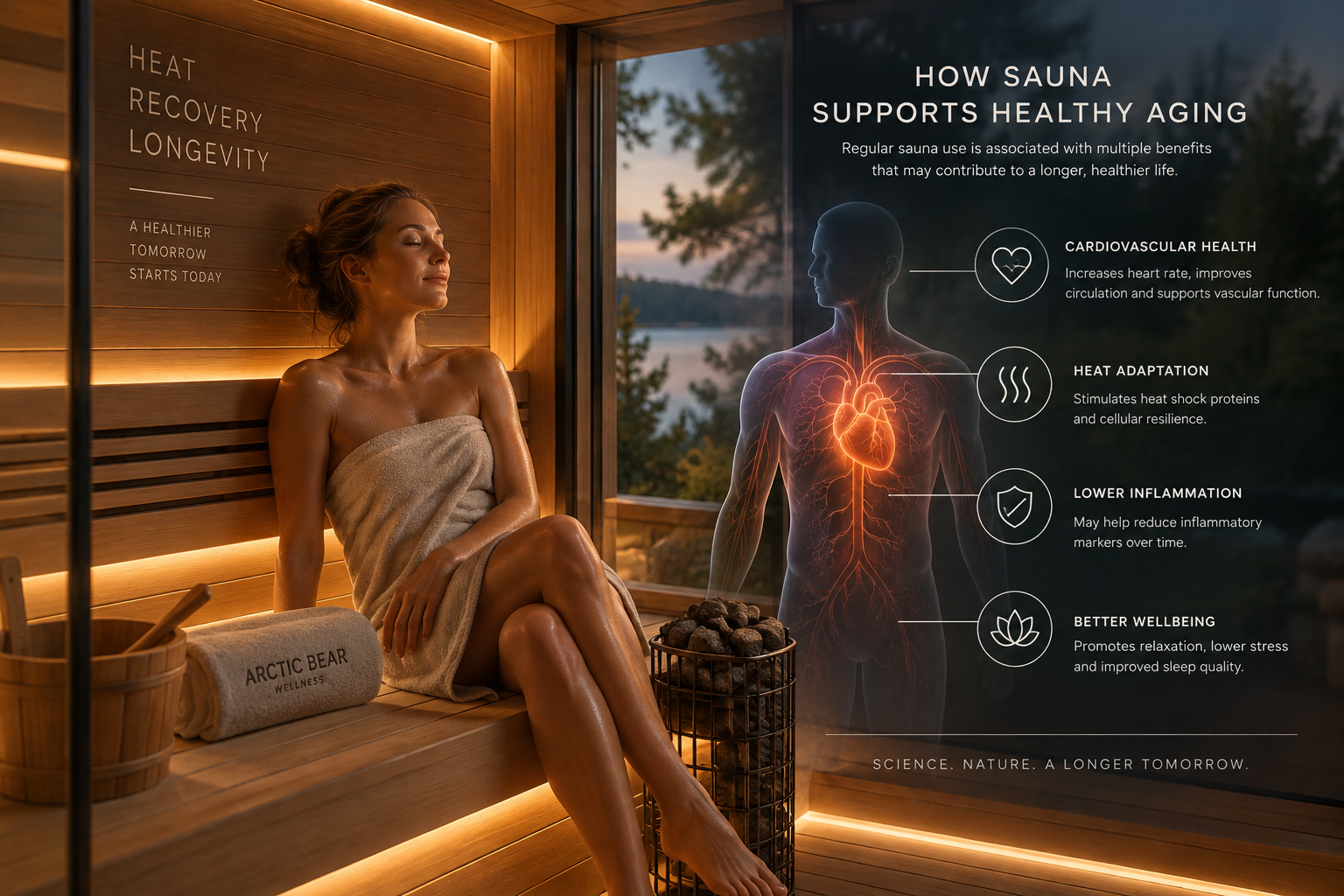
During sauna exposure, body temperature rises, blood vessels dilate and heart rate increases. Repeated exposure creates cardiovascular and thermoregulatory demands that may help explain some of the associations seen in population studies.
More recent Finnish cohort data continue to support an association between frequent sauna bathing and cardiovascular outcomes. For example, a study involving 2,575 Finnish men with a median 27.8-year follow-up found that lower sauna frequency was associated with higher cardiovascular mortality even after accounting for systolic blood pressure.
This still does not make sauna an “anti-aging treatment.”
Rather, current research suggests that regular sauna bathing may be one useful component of a lifestyle that supports cardiovascular health and healthy aging.
What About Cold Plunge Longevity?
This is where the evidence becomes much less certain.
A 2024 review by Setor Kunutsor, Andrea Lehoczki and Jari Laukkanen examined cold-water therapy as a potential strategy for healthy aging. The researchers found promising evidence involving cardiometabolic risk factors, brown adipose tissue, energy expenditure and psychological wellbeing.
However, much of that evidence came from small intervention studies, and the authors concluded that definitive interventional evidence is still needed before cold-water therapy can be considered a proven strategy for extending healthspan.
So although cold plunge longevity is becoming a popular concept, there is currently no convincing evidence that regular cold plunges make people live longer.
That doesn't mean they have no value.
It means we need to separate demonstrated benefits from attractive hypotheses.
What the Latest Cold-Water Research Found
A particularly useful 2025 systematic review and meta-analysis by Tara Cain and colleagues examined 11 studies involving 3,177 participants.
Cold-water exposure ranged from 7°C to 15°C, with protocols varying considerably.
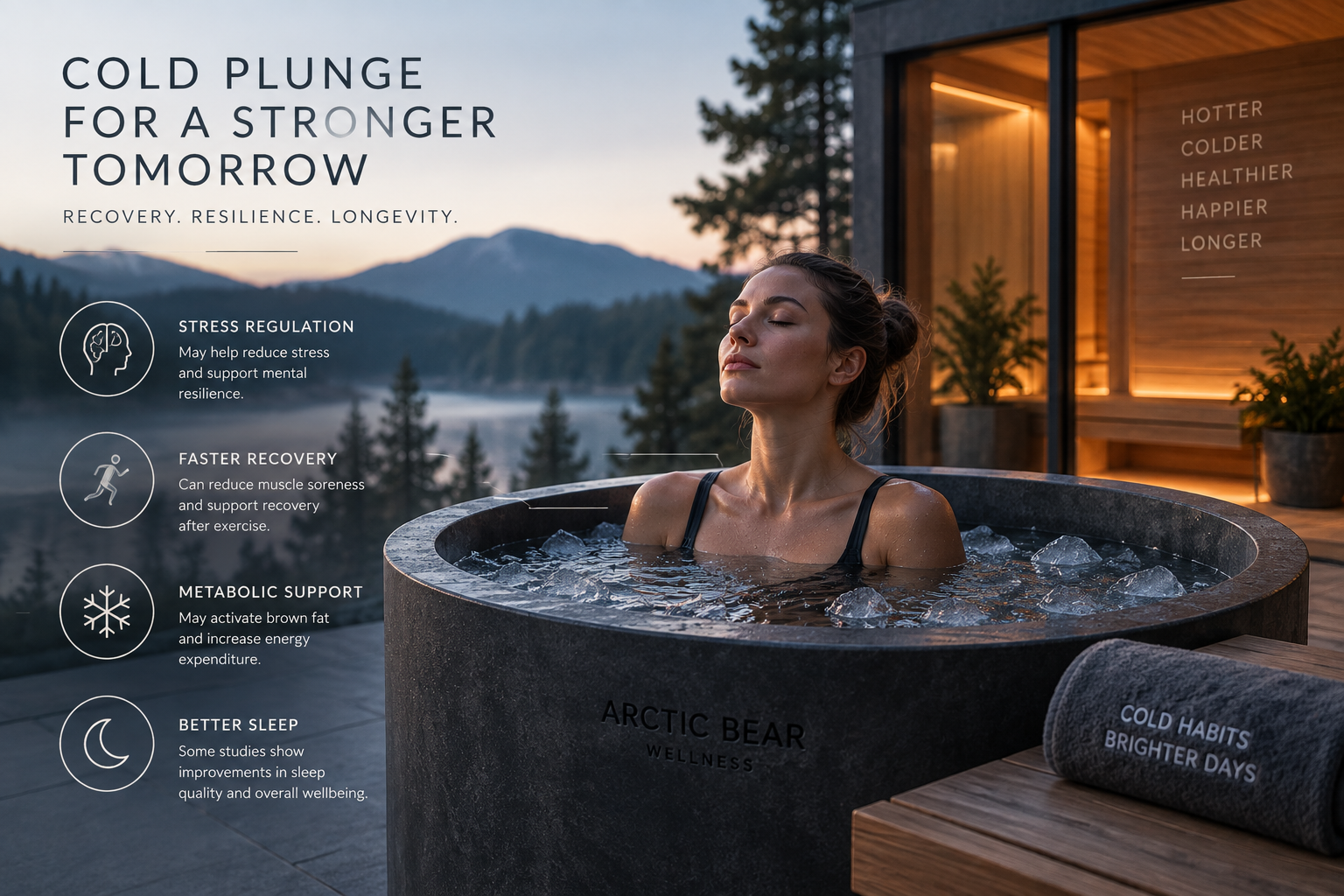
The researchers found a significant reduction in stress 12 hours after cold-water immersion, while no significant stress reduction was detected immediately, one hour, 24 hours or 48 hours after exposure.
Interestingly, inflammatory markers actually increased immediately and one hour after immersion, reflecting an acute physiological response. No significant immediate immune-function improvement was demonstrated either. Some individual studies reported improvements in sleep quality and quality of life.
This is a good example of why cold exposure should not be reduced to simplistic claims such as “cold reduces inflammation” or “cold boosts immunity.”
The body's response is more complex.
Sauna vs Cold Plunge: Which Has Stronger Longevity Evidence?
For longevity specifically, the difference is fairly clear.
The key point is that sauna and cold plunge should not be presented as scientifically equivalent longevity interventions.
Sauna currently has substantially more long-term human data. Cold exposure has interesting physiological effects and useful recovery research, but direct longevity evidence remains preliminary.
Can Combining Heat and Cold Be Better?
Alternating sauna and cold exposure has deep roots in Nordic bathing culture and is increasingly common in modern recovery spaces.
Physiologically, the two exposures are very different.
Heat promotes vasodilation, sweating and relaxation. Cold produces rapid vasoconstriction and sympathetic activation before the body begins recovering from the stimulus.
This makes contrast therapy interesting from a recovery and wellness perspective.
However, there is currently insufficient evidence to claim that combining sauna and cold plunge extends lifespan more effectively than sauna alone—or extends lifespan at all.
What the Evidence Supports
MORE ESTABLISHED
🔥 Sauna
Cardiovascular health + long-term mortality associations
↓
PROMISING
❄️ Cold Plunge
Recovery + stress response + wellbeing
↓
STILL UNDER STUDY
🔥 + ❄️ Heat & Cold Together
Direct effects on healthspan or lifespan
[INFOGRAPHIC: Evidence hierarchy above]
What Matters More for Longevity?
This is perhaps the most important section of the article.
Neither sauna nor cold plunge can compensate for smoking, inactivity, chronic sleep deprivation or poor metabolic health.
The foundations of healthy aging remain much less exotic:
- regular physical activity;
- sufficient sleep;
- balanced nutrition;
- cardiovascular and metabolic health;
- avoiding smoking;
- managing chronic stress;
- maintaining meaningful social connections.
Sauna and cold exposure are better understood as additional tools within a healthy lifestyle, rather than replacements for these fundamentals.
A Practical Approach
For healthy adults interested in sauna or cold exposure, consistency is likely more sensible than chasing extreme temperatures.
The Finnish mortality research should also not be interpreted as a prescription to immediately begin taking 4–7 saunas every week. Observational associations cannot determine an ideal protocol for an individual.
Likewise, the 2025 cold-water review included protocols ranging from 30 seconds to as long as two hours, demonstrating how heterogeneous the existing research remains.
A sensible approach is to build tolerance gradually and treat both heat and cold as controlled physiological stressors—not endurance challenges.
People with cardiovascular disease, uncontrolled blood pressure or other relevant medical conditions, as well as pregnant people, should discuss intense heat or cold exposure with an appropriate healthcare professional.
Frequently Asked Questions
Does sauna increase lifespan?
We cannot currently say that sauna causes people to live longer. Long-term Finnish observational studies have found an association between frequent sauna use and lower cardiovascular and all-cause mortality, but observational research cannot establish causality.
Do cold plunges increase longevity?
There is currently no strong human evidence showing that cold plunges extend lifespan. Research is more promising for recovery, stress response, wellbeing and several cardiometabolic mechanisms.
Which is better for longevity: sauna or cold plunge?
Based on current human evidence, sauna has the stronger longevity-related research base. Cold-water immersion remains promising but considerably less established for long-term health outcomes.
Is sauna and cold plunge together better?
The combination may provide an enjoyable contrast-therapy routine, but there is currently insufficient evidence to conclude that combining heat and cold produces greater longevity benefits than either intervention separately.
Final Thoughts
The science of longevity rarely produces simple answers.
For sauna, decades of Finnish observational research provide an intriguing and increasingly substantial link between frequent bathing and cardiovascular health, including lower mortality in some cohorts. But association should not be mistaken for proof of life extension.
For cold plunges, the story is earlier in its development. Recent reviews identify potentially useful effects on stress, recovery and cardiometabolic mechanisms, but direct evidence for lifespan extension is not yet there.
Perhaps the most useful question, then, is not:
“Will this make me live longer?”
but:
“Can this become one sustainable part of a lifestyle that helps me stay healthier for longer?”
For sauna and cold exposure, current research suggests that is the more scientifically defensible—and ultimately more useful—way to think about longevity.
References
- Laukkanen T, Khan H, Zaccardi F, Laukkanen JA. (2015). Association Between Sauna Bathing and Fatal Cardiovascular and All-Cause Mortality Events. JAMA Internal Medicine, 175(4), 542–548. DOI: 10.1001/jamainternmed.2014.8187.
- Kunutsor SK, Lehoczki A, Laukkanen JA. (2024). The untapped potential of cold water therapy as part of a lifestyle intervention for promoting healthy aging. GeroScience. DOI: 10.1007/s11357-024-01295-w.
- Cain T, Brinsley J, Bennett H, Nelson M, Maher C, Singh B. (2025). Effects of cold-water immersion on health and wellbeing: A systematic review and meta-analysis. PLOS ONE, 20(1), e0317615. DOI: 10.1371/journal.pone.0317615.


